Ice Makers for the Food Service Industry: What Really Matters When Choosing One
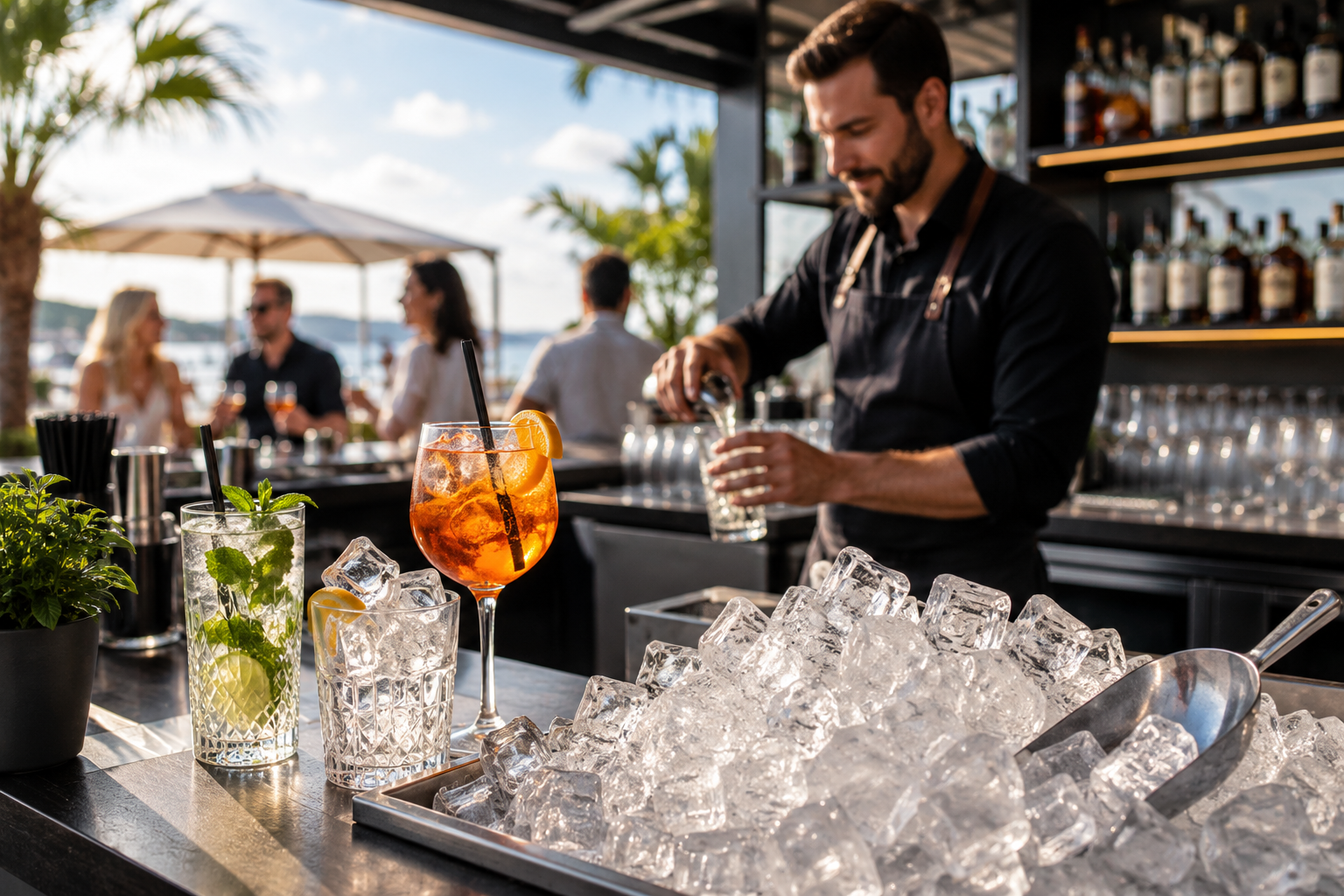
Especially during the summer months, the demand for ice cubes increases significantly in many food service establishments. Whether it’s chilled soft drinks on the patio, cocktails at the hotel bar, or the daily serving of beverages in a restaurant: a reliable supply of ice is an integral part of operations in many areas.
But which ice maker is the right one? The choice depends not only on daily production volume, but also on factors such as the installation location, the water supply, and the specific requirements of each facility.
Why choosing the right equipment Is important
Ice makers are often among those appliances that people don’t pay attention to until their capacity is no longer sufficient. However, a shortage can quickly become apparent, especially during peak times.
That’s why it’s worth considering what the actual requirements are right from the planning stage. After all, the requirements for a small café differ significantly from those of a hotel bar, a restaurant, or a convenience store.
If you realistically assess your actual needs, you can significantly narrow down your choices for the right device.
Water tank or permanent water connection?
One of the first questions to consider when choosing an ice maker is the water supply.
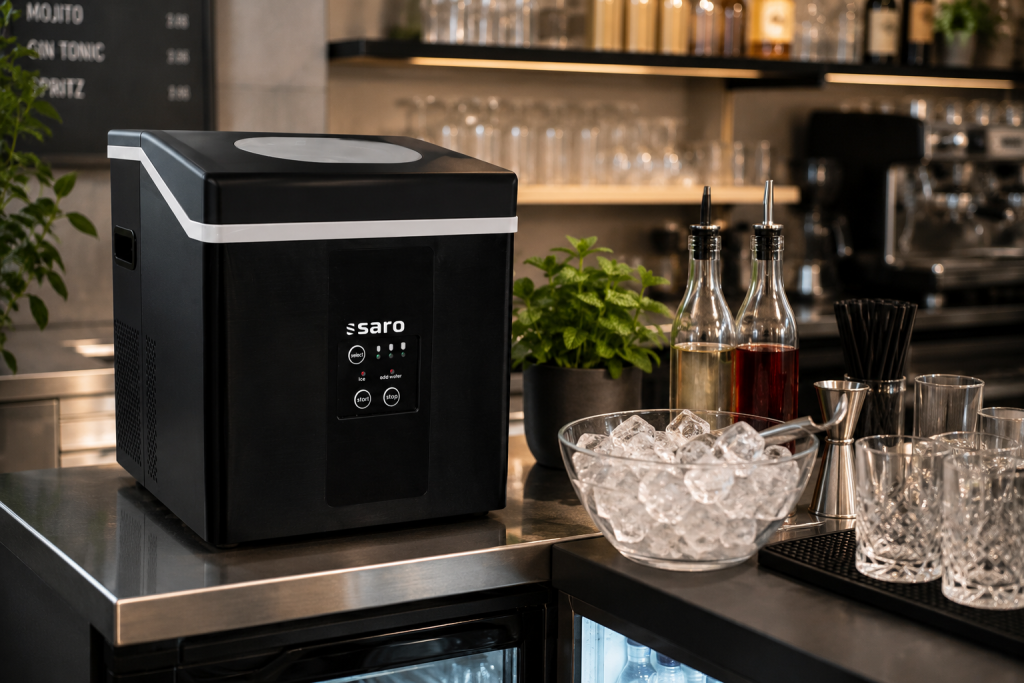
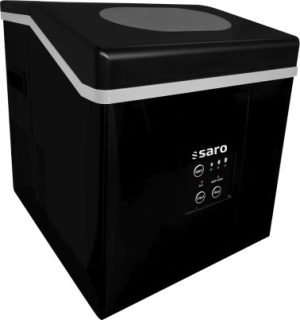
For smaller applications or locations without a direct water connection, units with a built-in water tank can be a practical solution. Our product line includes, for example, the following models EB 15 PRO and EB 15 S PRO. Both units feature a built-in water tank and can be set up flexibly.
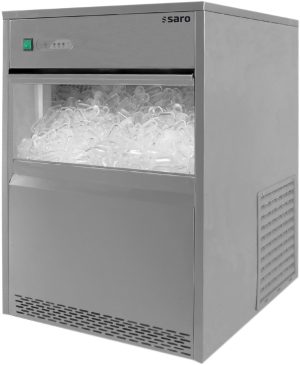
For businesses with regular or higher ice demand, however, machines with a permanent water connection are often the better choice. Models such as the EB 26, EB 40, or EB UV20 PRO are connected directly to the water supply and allow for continuous operation without manual refilling.
This can be a decisive advantage in day-to-day use, especially in bars, restaurants, or hotels.
Realistically estimate the required ice production
When choosing an ice maker, people usually look first at the maximum production capacity. However, it’s just as important to consider how much ice is actually needed.

While smaller businesses can often get by with lower production volumes, demand can be significantly higher during the summer season or other peak periods. Additional outdoor seating, events, or increased beverage sales during the summer months often result in a need for significantly more ice cream than during the rest of the year.
Anyone who plans too tightly here risks running into bottlenecks precisely when demand is at its highest.
For this reason, it is advisable not only to consider current demand but also to take into account potential growth and seasonal fluctuations.
Don’t forget the storage container
In addition to daily production capacity, the size of the built-in storage container is also a key factor. After all, the ice cream produced must be stored temporarily until it is used.
Especially during peak hours—such as lunchtime, in the evening, or on particularly hot summer days—a sufficiently large storage container can help ensure that ice is immediately available and does not have to be produced from scratch.
When making a selection, it is therefore advisable to consider not only the production output per 24 hours but also the storage capacity of the respective device.
Built-in appliance or freestanding solution?
Spatial considerations also play an important role in the selection process.
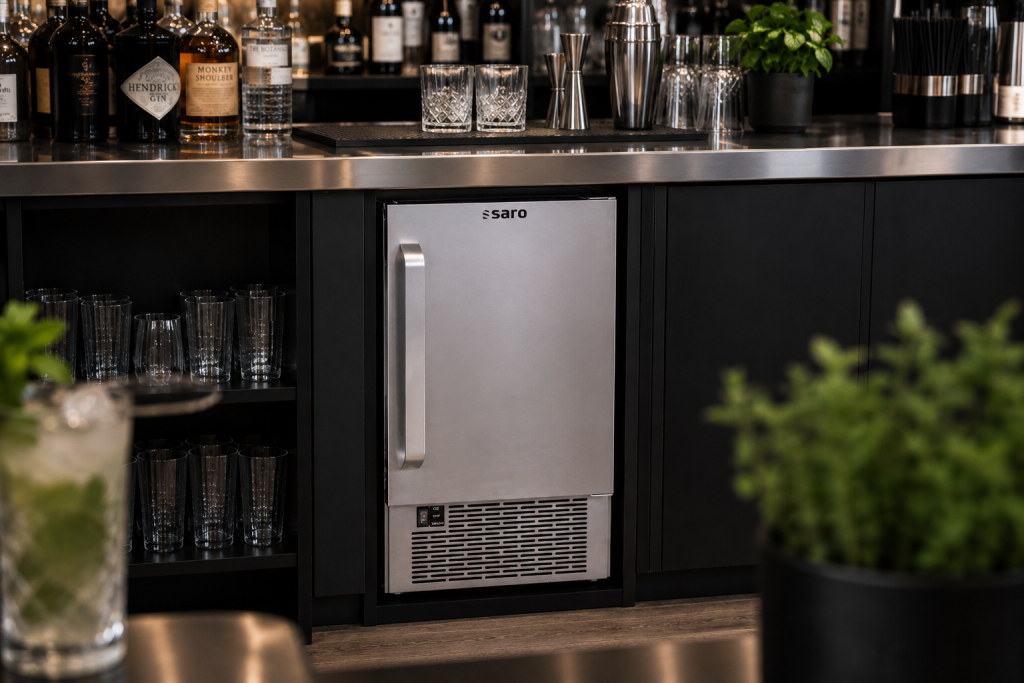
In addition to traditional freestanding units, our product line also includes the EB 30IN, a built-in ice maker. Such solutions can be particularly appealing for bar counter construction or custom interior design concepts.
Freestanding units, on the other hand, offer more flexibility in terms of placement and can be moved or replaced more easily if necessary.
Which option is more suitable therefore often depends on local conditions and the specific intended use.
Hollow ice cone or solid ice cone?
Not every ice maker produces the same shape of ice. Depending on the intended use, different ice shapes may be required. Therefore, it is advisable to take the characteristics of the respective machines into account during the planning phase.
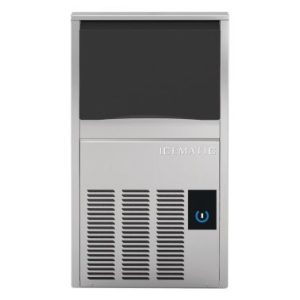
For example, the EB-series models produce hollow ice cones, while the C-series machines produce solid ice cones. Both types have their own specific applications and requirements.
It is therefore in the best interest of specialty retailers and designers to clarify, as early as the initial consultation, which type of ice is desired and what requirements the intended application will entail.
Don’t neglect hygiene and water quality
Since ice makers process water every day, hygiene and maintenance play an important role in ensuring reliable operation.
Our EB UV20 PRO model offers a special feature. The unit is equipped with two UV light units that can be switched on and off separately. One is located in the recirculation system, and the other in the storage tank. These units are designed to prevent the growth of germs and ensure hygiene.
Regardless of the model, ice makers should be cleaned and maintained regularly. Water quality is also an important factor to consider. For the EB UV20 PRO , for example, we recommend using a water softener installed upstream if the water hardness is 7 °C or higher.
Proper installation is just as important. The ventilation openings must remain unobstructed at all times so that the units can operate at full capacity.
What questions should be addressed before making a purchase?
Before choosing an ice maker, it’s a good idea to answer a few basic questions:
- How much ice is needed each day?
- Are there seasonal fluctuations in demand?
- Is there a water connection?
- How much space is available?
- Is a built-in appliance needed?
- Which ice cream flavor would you like?
- What are the requirements for cleaning and maintenance?
- How big should the storage tank be?
The more thoroughly these points are clarified in advance, the easier it will be to find the right solution.
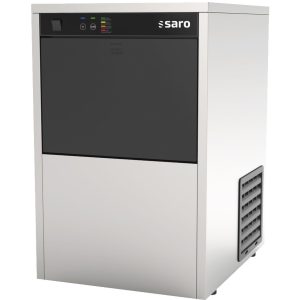
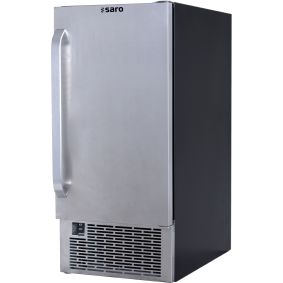
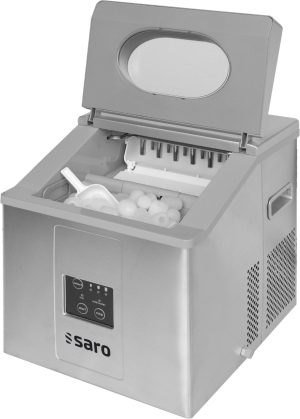
Conclusion: The right solution depends on the application.
There is no single ice cube maker that suits all applications. The individual requirements of each business are always the deciding factor.
Factors such as ice requirements, installation location, water supply, hygiene requirements, and available floor space should therefore be taken into account as early as the planning stage.
As a partner to specialty retailers, we offer a variety of ice makers for different applications. From compact units with water tanks to more powerful models with a direct water connection, our product line includes solutions for the restaurant, hotel, and foodservice industries.
Not sure which model best suits the needs of your project or your customers? Our team will be happy to help you choose the right solution and advise you on the various models and applications.
You can find an overview of all our current ice cube makers in our online store.